WORK
2000./2010.
The Mythical Screens of Matko Vekic
In the end, the real world will become a fairy tale - wrote Nietzsche in the century before last. But the real world has anyway always been a construction. Experience of reality has ever been mediated by culture, but because such images of the world are so long-lasting, their construction is perceived as natural. As the technology of mediating images and editing reality has progressed, the process has gathered pace, and we have the impression that we are living in a more virtual and constructed world than our parents did, or we ourselves did when we were children.
It has become trite to say that the screens and images that do the mediating have almost totally covered the real world and that where we are still consuming nature we experience it as artificial, authenticity parks that have been deliberately disneylandishly left.
But what does the concept of the virtual actually mean?
Is not the idea of the natural as against the virtual just another virtual construction?
We have no alternative but to swim in the world of mediaconstructed reality, which we have created, and which creates us, as natural as the anthill to the ant, the nest is to the bird.
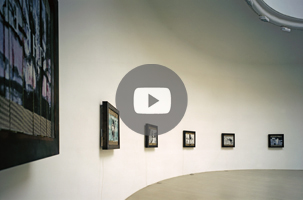
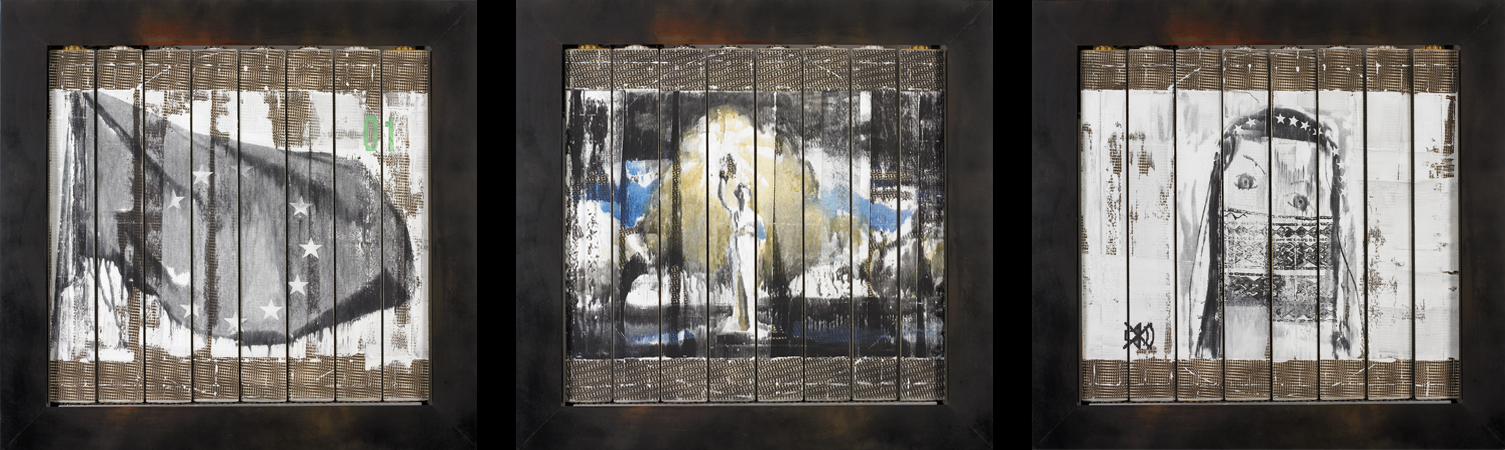
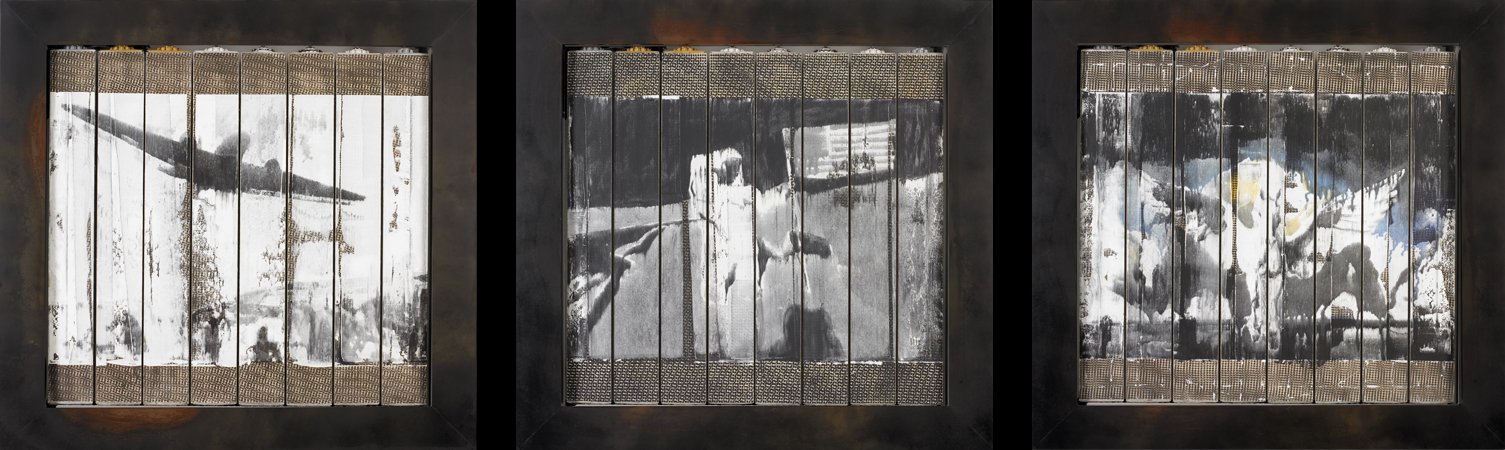
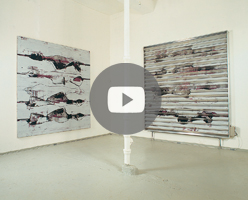
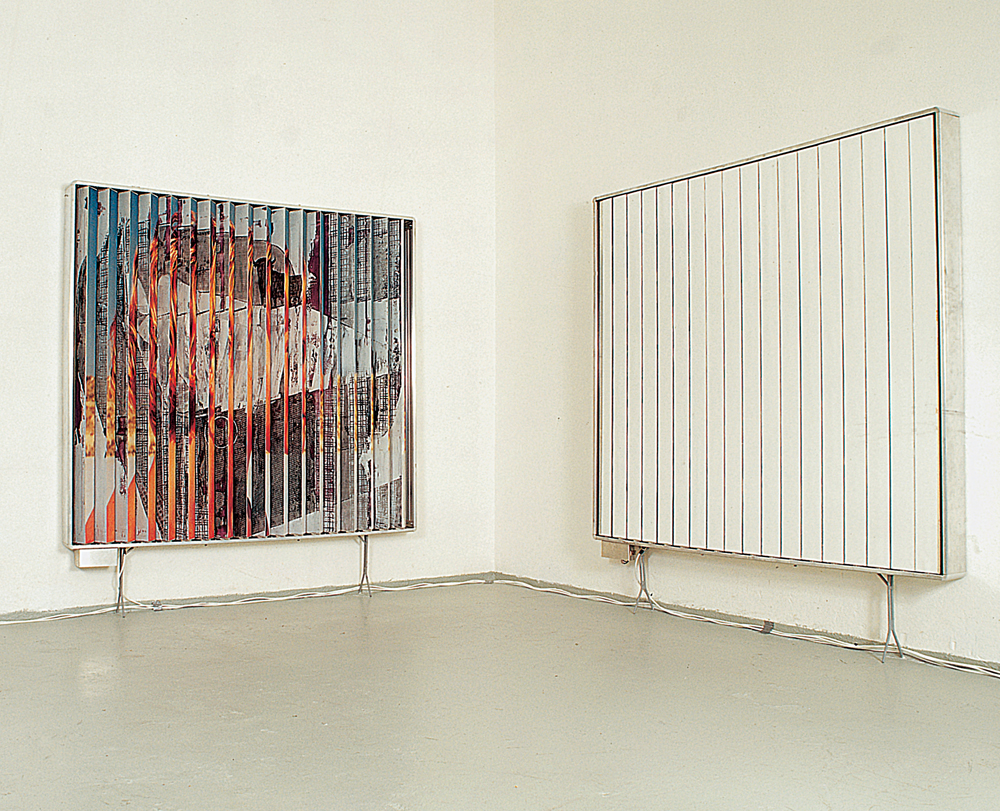
Film, and later television, became the most real reality in the last generation, which does noti n itself have to be either good or bad. Older generations stillhad the memories of the real world of their childhood believing that they experienced it directly and not conveyed to them by the media. But by the generation of Matko Vekic, people were starting to walk holding on to the television. In the depth of first recollections, whence somewhat unclear, black and white images crop up, in the consciousness of our generation there are no flowery meadows, animals and people, but on the whole pictures of them on the screen. Like those that in Vekic’s exhibition turn cut out in vast framed and composed alternating triptychs.
In this turning, which suggests televisual appearance and disappearance, scenes that are powerful, universal and old enough to have the effect of myth appear.
Cary Grant dives out of the way of a plane, a bomber flying, the shock effect of King Kong, the horror of history that we also know from the screen, Auschwitz and Hiroshima. Three images like the three divisions of the haiku unfold successively within the same frame to create a pointed new whole. The trademark of the film studio obtrudes itself as symbol of authenticity, the creator who creates the image, i.e. produces the world. On the same screen film scenes unwind as culture and historical as nature, occasionally interrupted with commercials, which also take on unguessed at archetypal dimensions. Within contemporary mass-media mythology, numerous sudden links pop up. The focus is upon the tension between the earthly, the animal (King Kong, the shark from Jaws, the Jägermeister stag, the lion on the logo a great film studio) and the celestial, symbolised by stars, from the EU flag to Heineken. It is impossible here to avoid thinking of the traditional conception of the human as something between angel and animal. The aircraft is from this point of view an expression of modern humanity’s endeavours to reach the stars. But not surprisingly, in Vekic’s images, it bombs the earth, kills an animal and hounds a man.
Nino Raspudic