WORK
1996./2001.
The painter Matko Vekić has for the whole of a decade worked through a series of exceptionally interesting development sin problems and motifs, and has made a position for himself as one of the most serious of artist sin the contemporary Croatian visual arts. His reputation partially reposes on his unquestionable loyalty to the medium he has chosen, and partially on a systematic modification of the traditional capacities of painting. In this manner he at once satisfies the criteria of excellence of performance according to craft criteria and a credible treatment of the surface of the composition, while also responding to demands for imaginative supplementation, symbolic development and self-critical reflections on his own acts. Thus there will be no difficulty in concluding that, along with formal gifts, gestural and chromatic coherence and skill in suggestive drawing, he is also characterised by a marked awareness of meta-media and meta-painting which speak in concert of an exemplary participation in post-modern, or even post-post-modern, artistic practice.
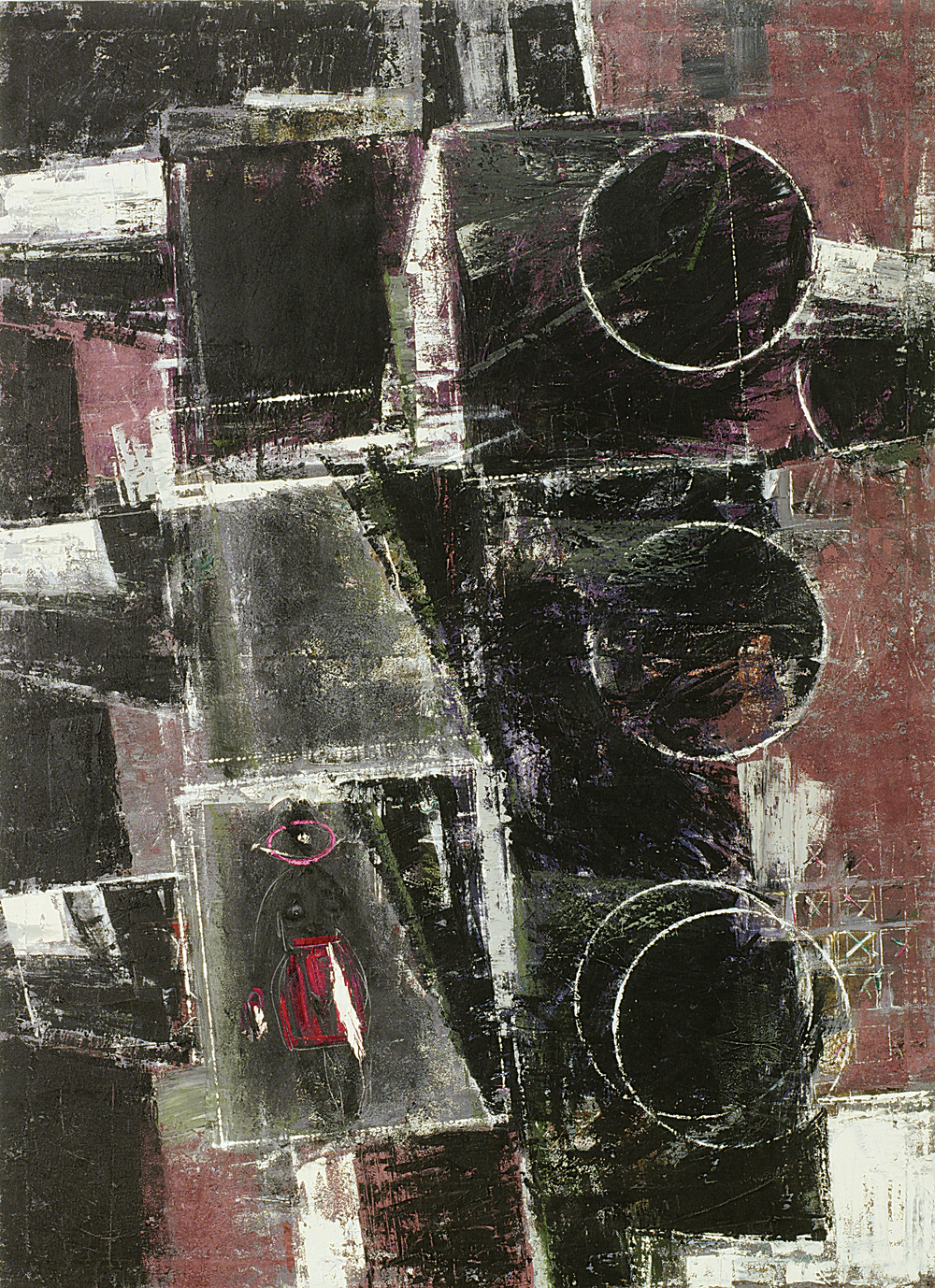
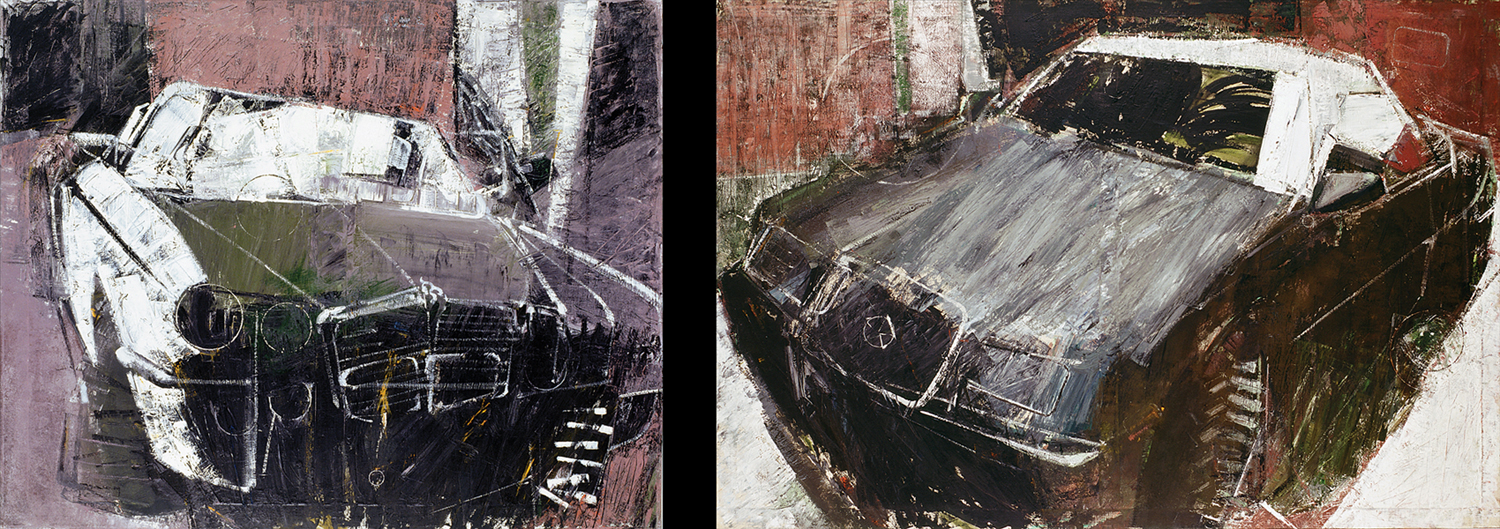
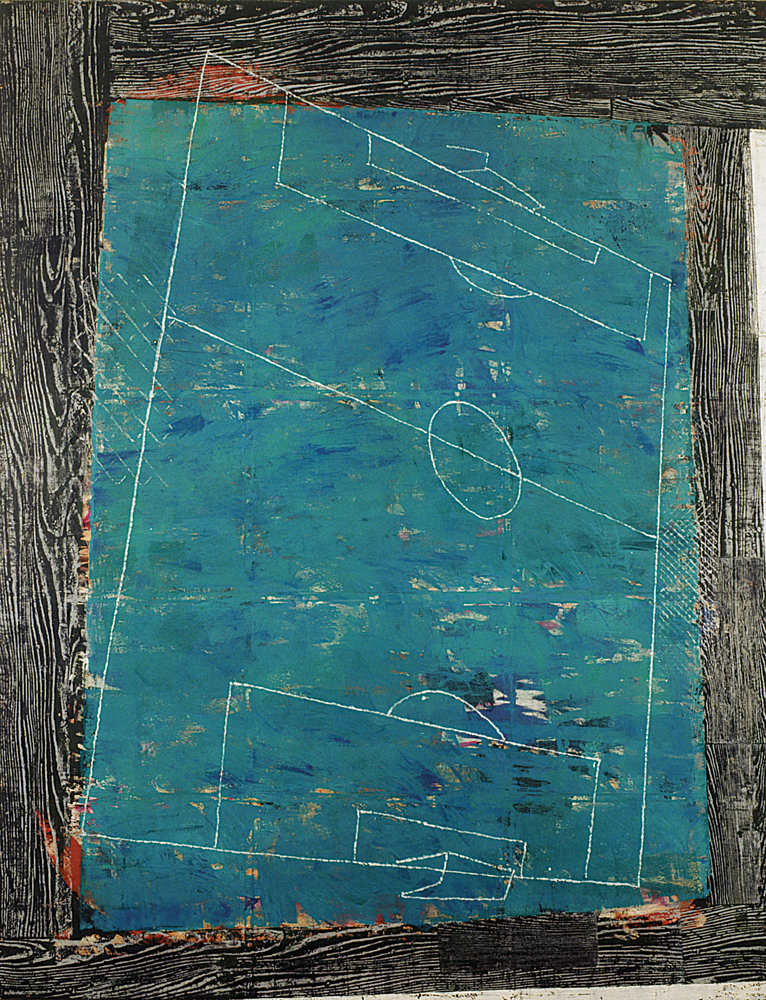
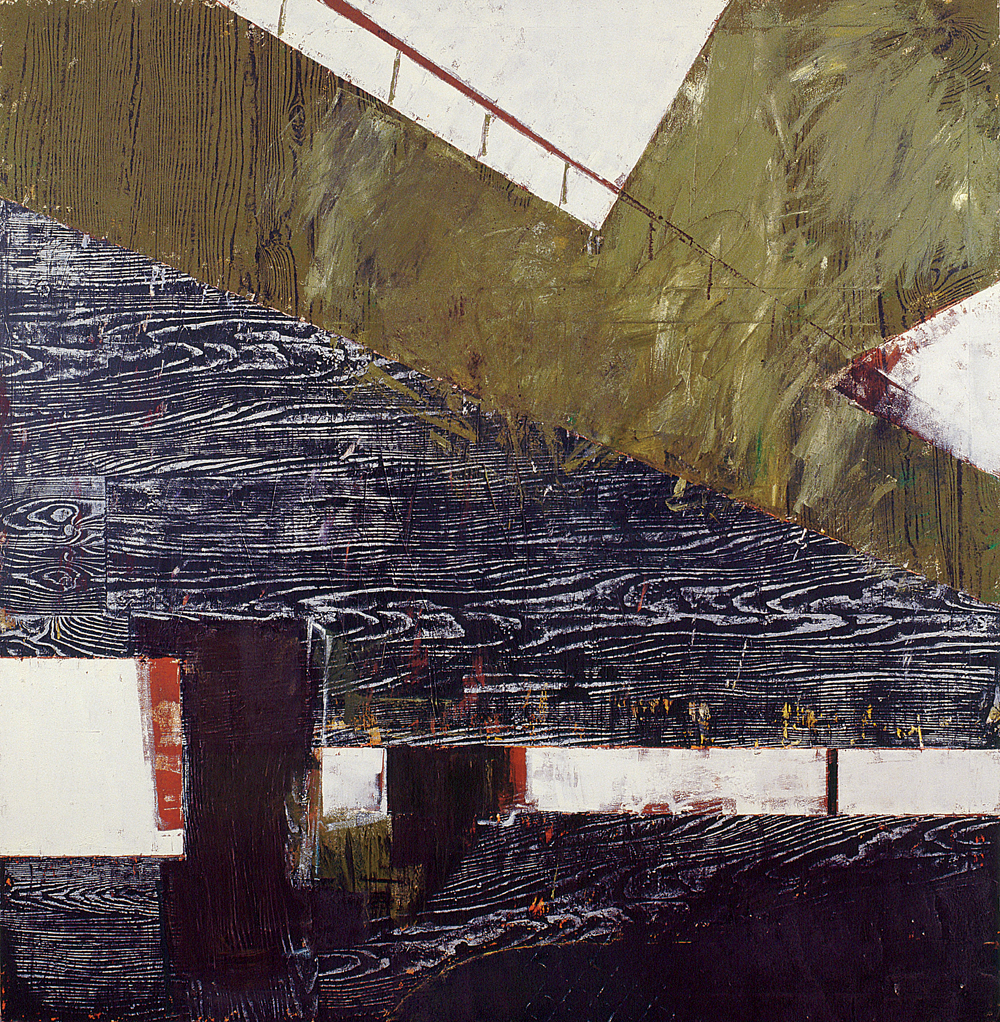
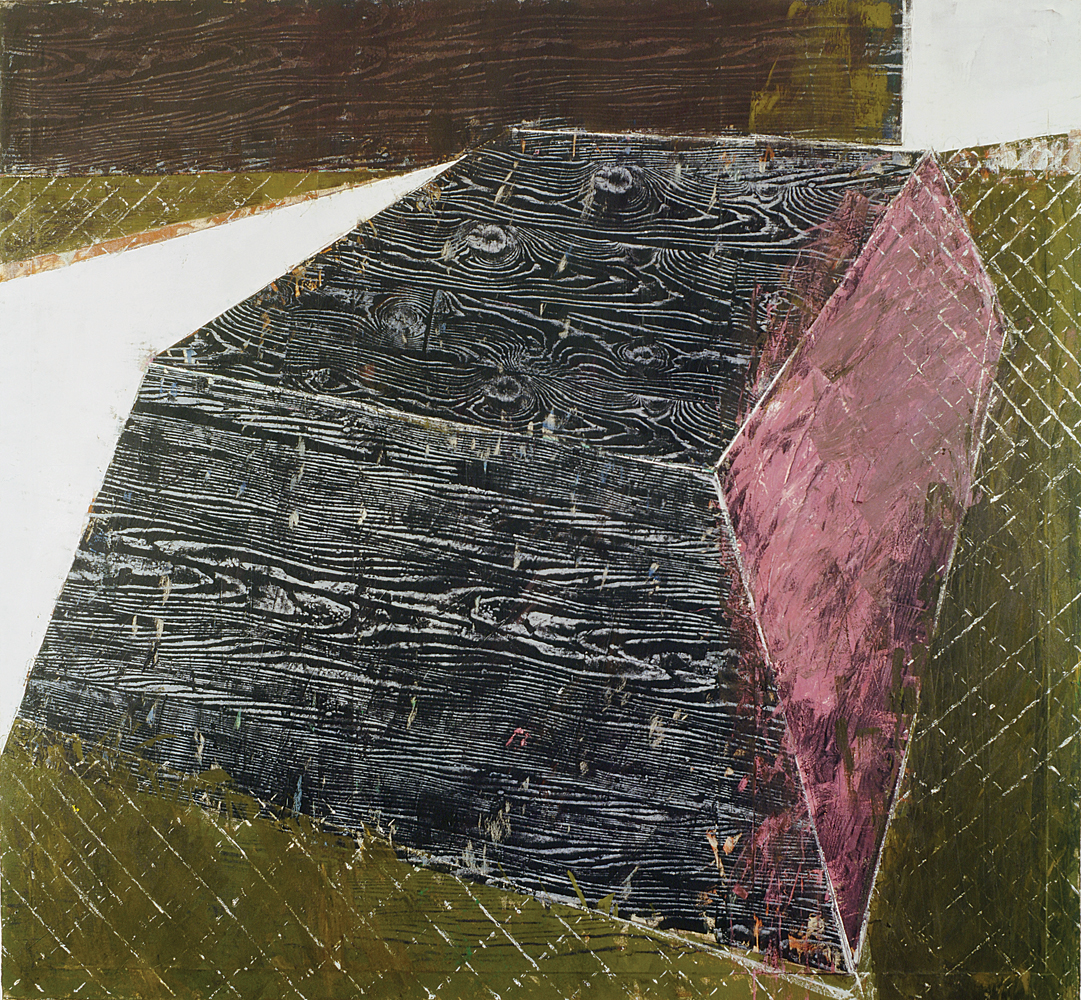
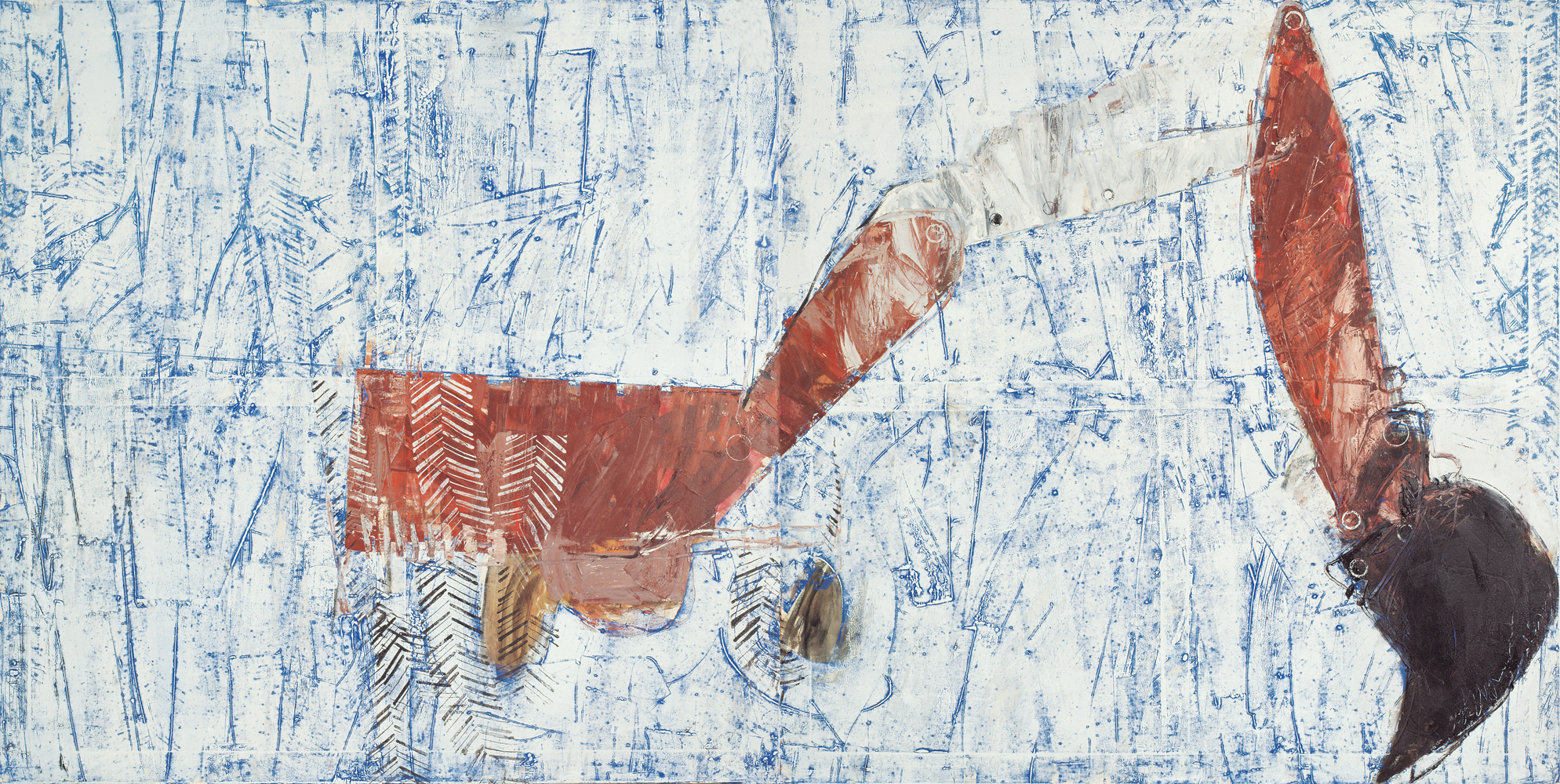
So far, Matko Vekić has shown most of his exhibitions as homogenous cycles, units that are rounded off both thematically and morphologically. In his painterly variations or phases, he has also dealt with a very diverse set of iconic materials such as insects and cars, toilets and stadiums, electricity poles and building sites, city squares and spitted lambs, ditchers and cranes, clouds and elementary nature, body-builders and odalisques. However much he every time insisted on a certain allusiveness in his motifs, and definition of outline, it has been clear that nevertheless he finds facture of application and graphism more important, the very relations of surface and line, practically on the threshold of abstraction or the free composition of formal ingredients. His colourism from the beginning has acquired a restrained and distinctive register of idiosyncratic tones, with the occasional accent on tart, bitter or acerbic particles, and the treatment of the surface combines parts of a personal handwriting, plots filled with cylinder and blotches applied with stencils. At a structural level, Vekić's frames are enlivened by their diversity of treatment, from quadratic subdivisions of the field to the dotted vibrations of reticular perforations.
But while lauding Vekić's skilled and intricate morphology, we should not forget the iconological role of the motifs mentioned, nor the paradoxical coherence of the actually rather disparate motivations behind the painting. With all the autonomy the vitality of the worked surfaces, this painter is not by chance (for the moment, continuously) bound up with figuration, with an associative set of motifs of the everyday, the current, the contemporary world. This does not mean some Pop Art obsession with the icons of consumer society but does mean the consistent employment of a series of conventionalised figures and signs, often with a slight ironic distance, but not with any parodic or satirical intention. For the painter's participation in the working-out of the motif regularly bears the sign of empathic closeness, indeed, a decorously creative transformation of the promptings, a sublimation of their banality.
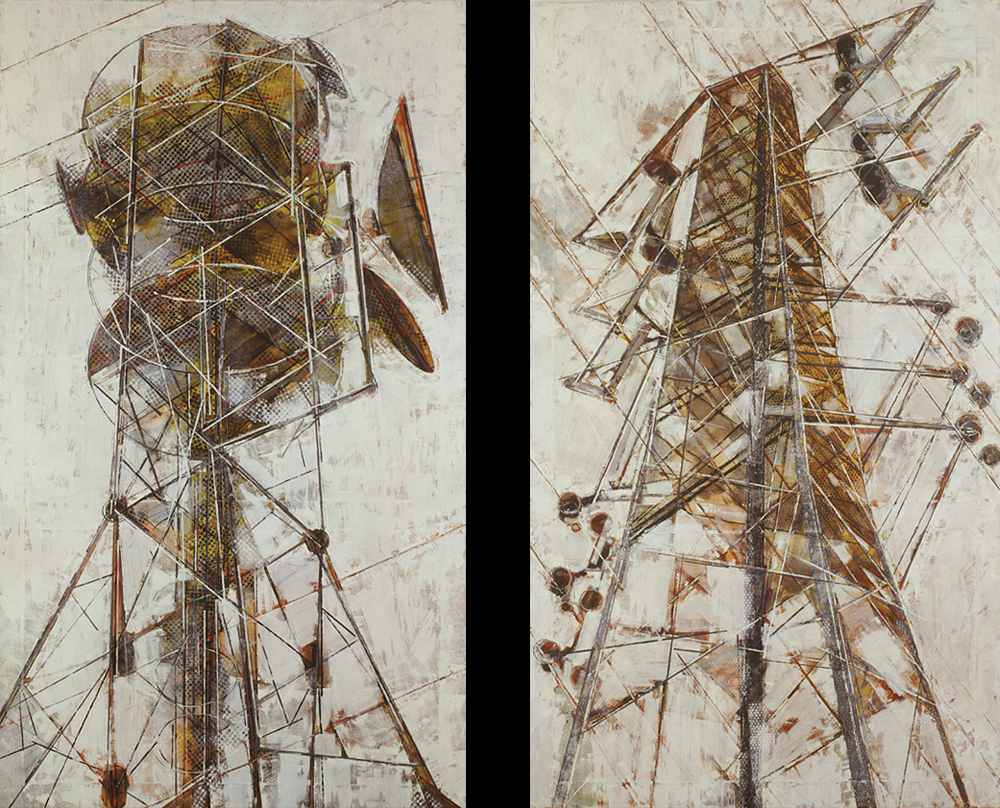
What is particularly important with Vekić is the ability to pull together distant extremes, the power to encompass with a unique personal style such diverse phenomena and heterogeneous levels as: the mechanical and the organic, the constructive and the biomorphous, the static and the moving, the large and the small. Typical of this is his title: Big in the Little, which relates to a series of paintings inspired by insects, where tiny transparent winged creates are presented as complex systems of mighty skeletal construction. The upright formats of the motif have much to do with or overlap with the depictions of the assembly pillars, signal towers or parts of bridges and viaducts as painted by the same artist. That is, through methodical reduction, the items are rendered with hard outlines and powerful venation, as if they had been pressed on some base; yet the surface is the while animated with dynamic procedures such as scratching, imprinting, shading, rubbing…Vekić also knows the temptation of monochromy, of Informel treatments, indications og geometricalisation, and in the more recent period has been unable to resist the lure of kineticism, movable and changing pictures.
Tonko Maroević